The entryway is the first part of your home that you see and the last place you pass before heading out. Because it handles coats, shoes, bags, keys, mail, and many other daily items, it can become cluttered quickly. The good news is that you do not need a large space or expensive furniture to keep it organized.
A few thoughtful storage choices and simple habits can make your entryway easier to use. Whether you have a wide foyer, a narrow hallway, or only a small area beside the door, these practical ideas can help you create a tidy and welcoming space.
Start by Clearing the Area
Before adding storage, remove everything from the entryway. Place coats, shoes, bags, papers, and other items in separate groups. This gives you a clear view of what actually belongs near the door.
As you sort, ask yourself a few simple questions:
- Do I use this item regularly?
- Does it need to be stored in the entryway?
- Is there a better place for it elsewhere in the home?
- Is it damaged, unused, or ready to be donated?
Keeping only frequently used items near the entrance prevents the space from becoming a holding area for things that do not have a home. Seasonal items, extra shoes, and rarely used accessories can be stored in a closet, bedroom, or labeled storage box.
Choose Storage Based on Your Space
The best entryway storage fits both your available space and your daily routine. A large cabinet may work well in a spacious foyer, but it can make a narrow hallway feel crowded. Measure the area before buying anything, including the width of walkways and the space needed to open doors.
Small Entryways
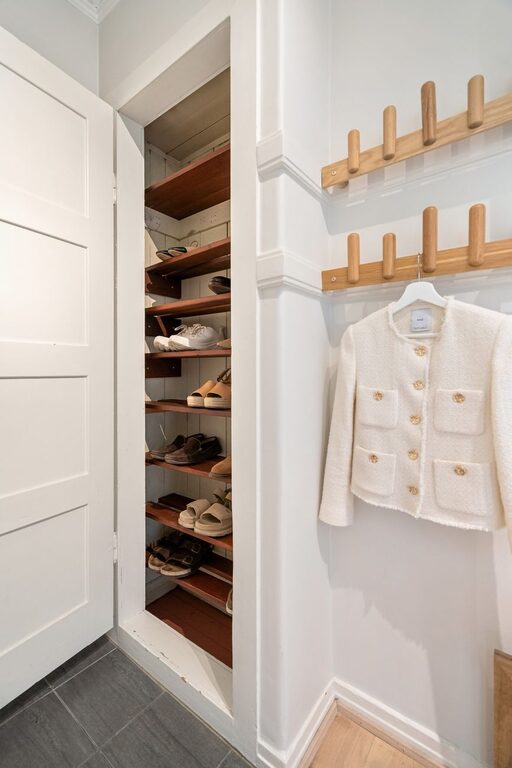
For a compact entrance, use the wall as much as possible. A few hooks, a narrow shelf, or a slim console table can provide useful storage without taking up much floor space.
Consider using:
- Wall mounted hooks for coats, hats, and bags
- A narrow shoe rack or tiered shelf
- A small basket for scarves and gloves
- A floating shelf for keys and small items
- Over the door organizers for accessories
Larger Entryways
If you have more room, combine open and closed storage. A bench with cubbies can hold shoes, while a cabinet can hide seasonal items and extra bags. Open hooks make daily items easy to reach, and drawers or doors help keep less attractive items out of sight.
Create a Dedicated Spot for Shoes
Shoes are one of the most common sources of entryway clutter. Give them a specific place so they do not spread across the floor. A shoe rack, bench with storage, or set of baskets can keep pairs together and make cleaning easier.
Keep only the shoes that are used regularly near the door. Store special-occasion shoes and seasonal footwear somewhere else. If several people share the space, assign each person a shelf, basket, or section of the rack.
A washable mat placed inside or just outside the entrance can also help contain dirt and moisture. Make sure the mat is large enough for people to step onto it comfortably when removing their shoes.
Use Hooks Instead of Hangers for Daily Items
Hooks are often more convenient than hangers for everyday coats, backpacks, and reusable shopping bags. They allow family members to put items away quickly, which makes the habit easier to maintain.
Install hooks at a comfortable height for the people who use them. Lower hooks can help children manage their own coats and bags. If you have limited wall space, use a row of hooks or a vertical arrangement with several levels.
A useful rule is to assign one or two hooks per person and leave a few extra for guests. Too many hooks can encourage the entryway to become overloaded, so remove items that are no longer used regularly.
Set Up a Key and Essentials Station
Keys, sunglasses, wallets, and other small items are easy to lose when they do not have a designated spot. Create a simple essentials station near the door using a small tray, bowl, shelf, or wall organizer.
Keep the station limited to items you use when leaving or returning home. A tray can hold keys and sunglasses, while a small container can store spare change or loose items. Avoid placing unrelated objects there, since the area can quickly turn into a catchall.
If several people use the entryway, labeled containers can make it easier for everyone to keep track of personal items. A small label or symbol is often enough to identify each person’s space.
Manage Mail and Paper Clutter
Mail can make an organized entryway look messy within minutes. Create a basic system with separate places for incoming mail, papers that need attention, and items ready to leave the house.
A wall-mounted file holder or a few labeled folders can work well. Set aside a regular time to sort papers so they do not pile up. Recycle unwanted envelopes and advertisements as soon as possible.
You can also add a small “to go” basket for library books, returns, or items that need to be taken elsewhere. Check it regularly so it remains useful rather than becoming another place for clutter.
Make the Most of Baskets and Bins
Baskets and bins are flexible tools for organizing an entryway. They can hold items that are difficult to stack, such as winter accessories, pet supplies, or reusable bags.
Choose containers that fit under a bench, on a shelf, or inside a cabinet. If several bins look similar, add simple labels. Labels make it easier to find items and encourage everyone to put them back in the right place.
Use one container for each category instead of mixing everything together. For example, a basket for hats and gloves is easier to manage than one large bin filled with scarves, shoes, and bags.
Keep the Decor Simple and Useful
An entryway should feel welcoming, but decorative items should not interfere with daily use. A mirror can make a small space feel larger and provides a convenient place for a quick check before leaving. A small plant, framed picture, or simple runner can add personality without creating clutter.
Choose decor that is easy to clean and does not block storage areas. Keep walkways clear, especially around doors and stairs. If the entryway feels crowded, remove decorative items before adding more furniture.
Build a Quick Daily Reset
Organization works best when it is supported by a simple routine. Spend a few minutes each evening returning items to their designated places. Put shoes on the rack, hang coats on hooks, move mail to its proper location, and clear the essentials station.
Once a week, check for items that do not belong in the entryway. Return them to other rooms and remove anything that has accumulated on the floor or furniture.
To make the routine easier:
- Keep storage close to where each item is used
- Use open storage for everyday belongings
- Place a small wastebasket nearby for unwanted papers
- Give every regular item a specific home
- Review the space when seasons change
Adjust the System as Your Needs Change
Your entryway organization does not have to remain the same all year. In cold weather, you may need extra space for coats, boots, and gloves. During warmer months, you might store those items away and make room for hats, sandals, or outdoor accessories.
Review the setup every few months. If items are piling up in one area, the storage system may need to be adjusted. The most effective entryway is not necessarily the one with the most storage. It is the one that makes everyday actions simple.
By clearing unnecessary items, assigning a home for essentials, and using storage that fits your space, you can keep your entryway tidy with less effort. A few small changes can make coming home and heading out feel smoother every day.

Related Posts